Who made what
A thinker, a sculptor, an engineer, an architect — and a newspaper
The National Park Service keeps the official list of designers short and exact. Around that list sit other names the record also names: a first engineer who died, a minister who accepted the gift in Paris, and a publisher who finished the pedestal.
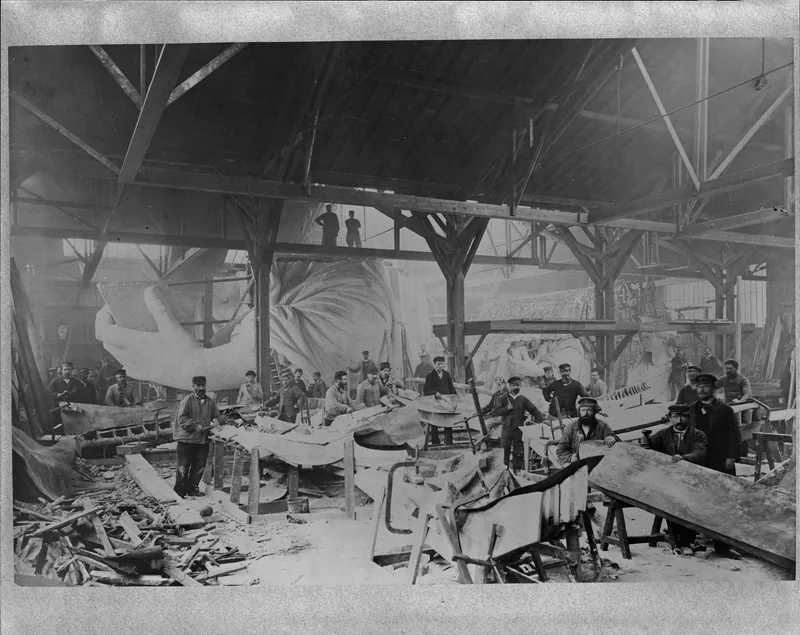
The facts page lists four official roles. The sculptor was Frédéric-Auguste Bartholdi. The architect of the pedestal was Richard Morris Hunt. The engineer of the statue was Eiffel and Company. The engineer of the pedestal was General Charles P. Stone. The idea itself is credited, on the same page, to “French thinker Édouard de Laboulaye and sculptor Frédéric Auguste Bartholdi.” The chronology spells Laboulaye without the accent; the later facts page writes “Édouard.” This site quotes each page as it stands and does not treat the spelling as a puzzle. [source] [source]
Eiffel was not the first engineer on the job. In 1879, “the Statue’s engineer, Eugene Viollet-le-Duc, dies and Bartholdi hires Alexandre-Gustave Eiffel to complete the project.” The obstacles, the chronology says, included the statue’s height and weight. When the statue was reassembled on the island, Eiffel’s iron framework was the first piece put back. [source] [source]
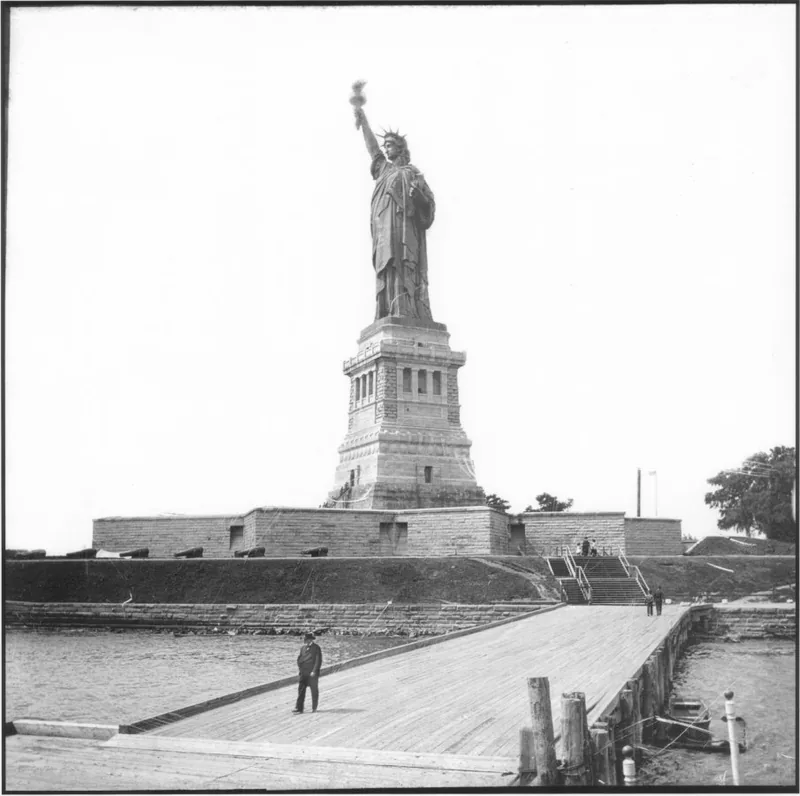
Hunt’s pedestal sat inside Fort Wood, on a concrete foundation that the chronology calls “the largest mass of poured concrete at that time,” with poured concrete walls “up to 20 feet thick, faced with granite blocks.” General Stone, appointed chief engineer in 1883, was responsible for the design and construction of that foundation and for construction of the pedestal. The cornerstone was laid on Bedloe’s Island. [source]
Money had its own makers. The American Committee, chaired by William Maxwell Evarts, “raises $125,000 between 1877 and 1884.” Then the money ran out, and work on the pedestal stopped. Pulitzer’s campaign in 1885 raised over $100,000 more, from roughly 125,000 people. Those are two official totals, for two official efforts, and this site does not add them into a single invented figure. [source] [source]
Keep exploring
Enjoyed the statue?
No pop-ups. No intrusive advertising. Just interesting stuff. A little support helps the next landmarks site get built.